



A highly invasive weed capable of overrunning an entire hectare of land in just six months has been found in Morayfield, and Moreton Bay is urging residents to stay vigilant as biosecurity officers work to stamp it out before it takes hold.
Read: Moreton Bay’s Award-Winning Wildlife Network Puts Bribie and Morayfield on the Map
Morayfield residents are being put on notice after Tropical soda apple, a highly invasive weed listed as a prohibited invasive plant under Queensland law, was detected at a site in the suburb, with Council biosecurity officers working to prevent the plant from spreading further across the region.
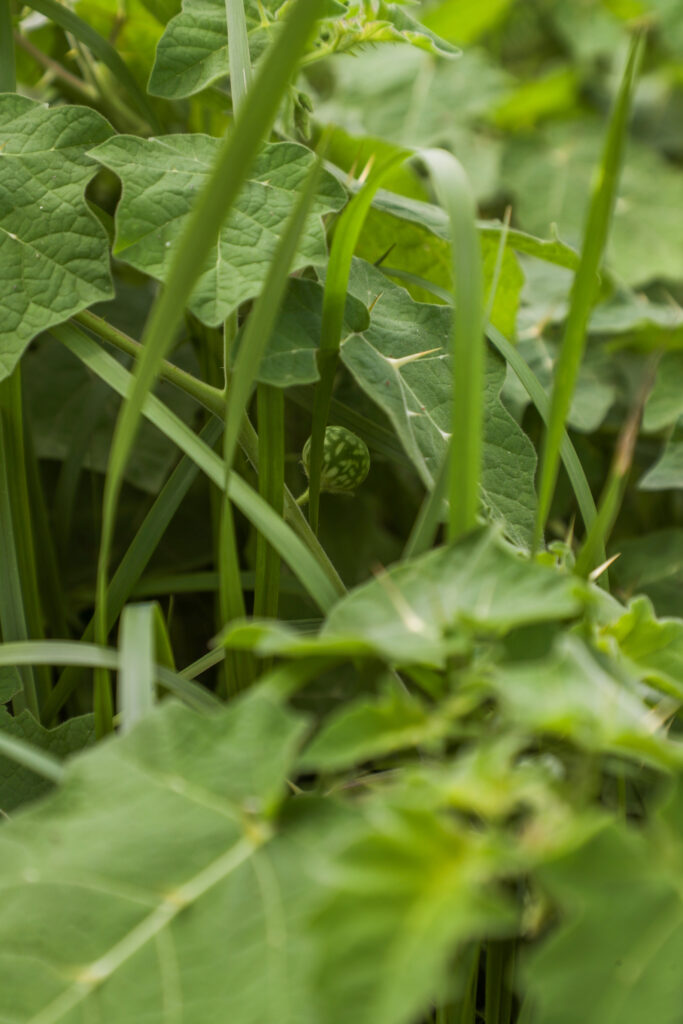
The find at Morayfield is separate from a cluster of detections in the Stony Creek and Neurum areas, where the weed has been confirmed on 18 properties out of 40 inspected along Stony Creek and the Lower Stanley River. Together, the detections have prompted Moreton Bay Regional Council to deploy its biosecurity team to work directly with affected landholders.
What is Tropical Soda Apple?
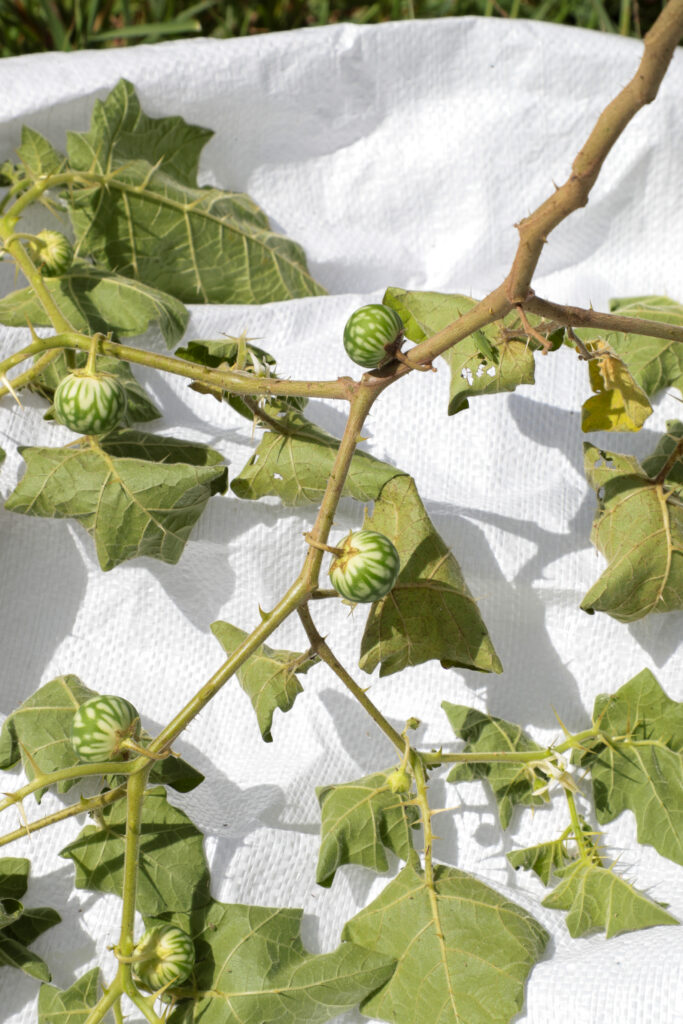
Known scientifically as Solanum viarum, Tropical soda apple, or TSA, is a perennial shrub native to South America that can grow up to two metres tall. It is covered in sharp, thorn-like prickles up to 12mm long that can injure both people and animals. The plant produces small yellow fruit and white flowers, but its impact on the landscape can be severe.
Left unchecked, TSA spreads at an alarming rate, forming dense thickets that block livestock from accessing water and shade. It can displace native vegetation and hosts a range of plant viruses known to damage fruit and vegetable crops including potatoes, tomatoes and eggplant. The fruit is also potentially poisonous to humans if consumed in large quantities.
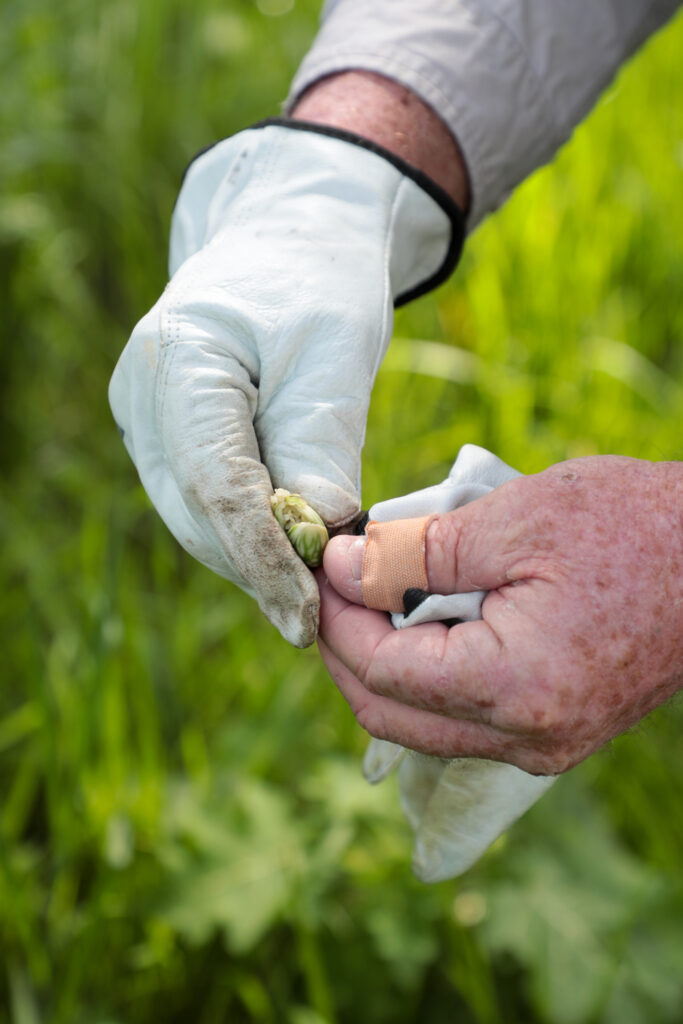
The weed is a prohibited invasive plant under Queensland’s Biosecurity Act 2014.
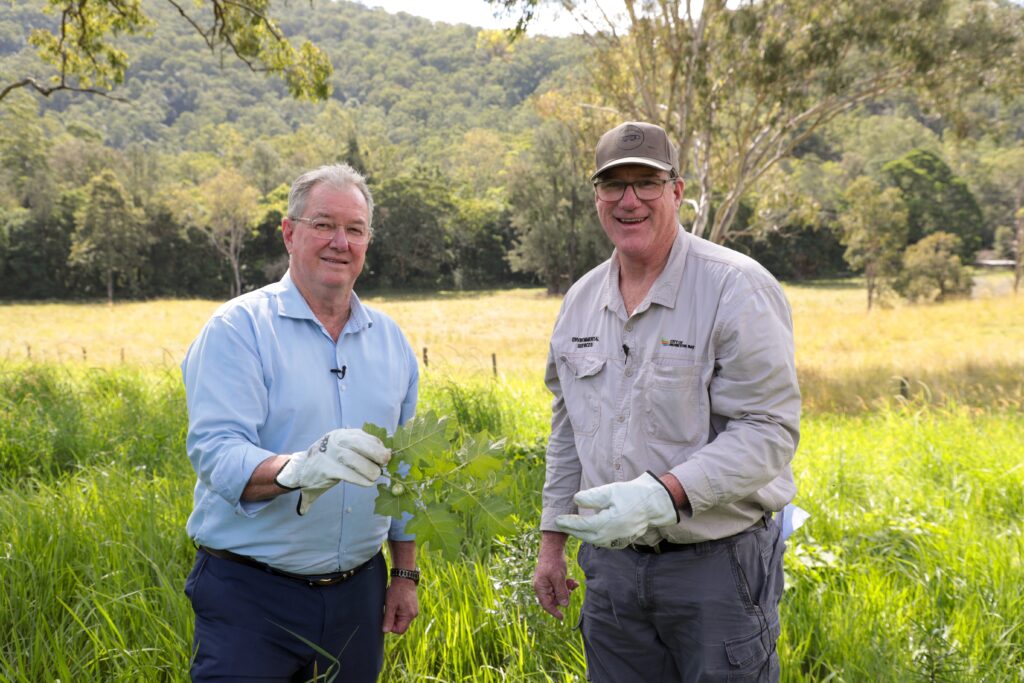
Mayor Peter Flannery said Council’s biosecurity officers were on the ground supporting landholders with identification, treatment and property management plans.
“Council is concerned TSA may become established so our biosecurity officers are supplying direction to landholders on how to identify, treat and remove the weed which can pose a serious risk to pastures, horticulture, natural areas, crops, livestock and even humans,” Mayor Flannery said.
The initial detection in the Stony Creek area was made by a contractor working in the region. The contractor, familiar with TSA from previous work in New South Wales where the plant is more prevalent, spotted it and uploaded a photo to the iNaturalist app, which confirmed the identification. Council believes the weed may have arrived via cattle that had grazed on infested land, possibly in NSW, before being moved to the region.
“The weed’s seeds are usually spread by animals that feed on the fruit,” Mayor Flannery said. “In this case, we believe the weed may have been spread to the Stony Creek area by cattle that had consumed Tropical soda apple from an infestation elsewhere, possibly in NSW, although it’s impossible to know for sure.”
As for the Morayfield detection, Mayor Flannery said that site appeared to be unrelated to the Stony Creek finds, with investigations still ongoing and conclusions yet to be determined.
In Florida, which shares a broadly similar subtropical climate to south-east Queensland, TSA infested more than half a million hectares in just five years, costing landowners millions of dollars annually. Council says early detection and reporting are key to preventing a similar outcome in the region.
Council is asking the entire community to keep an eye out for the weed, particularly in rural and semi-rural areas. If you spot a shrubby plant with yellow fruit, white flowers and sharp prickles on your property or nearby, do not ignore it.
Read: Two Morayfield Parks Merges to One, Major Road Works Begin
Sightings should be reported immediately to Biosecurity Queensland online, by phoning 13 25 23, or via the Exotic Plant Pest Hotline on 1800 084 881. The initial Stony Creek detection was made via the iNaturalist app, highlighting how community awareness can play a vital role in early identification.
Featured image credit: City of Moreton Bay
Published 30-April-2026