




Ten-year-old Arlo Charlton of Morayfield received a lifesaving liver transplant late last year through organ donation, recovering so completely that he started the new school year ready to go, just weeks after surgery at the Queensland Children’s Hospital.
The transformation came after years of serious illness. Arlo was diagnosed with congenital hepatic fibrosis, a rare disease affecting the liver, and fought off three separate bouts of sepsis before his condition made a transplant essential. His mother Cleo, who raised Arlo as a single parent throughout his illness, said her instinct that something was seriously wrong was initially dismissed by clinicians before the diagnosis was confirmed. A fourth bout of sepsis, she said, would likely have killed him.


The story sits within a national conversation about organ donation registration rates that health advocates describe as one of Australia’s most urgent and most solvable public health challenges.
A Transplant That Arrived Within Six Weeks
A suitable liver became available within six weeks of Arlo being listed, a timeline that Cleo described as both elating and terrifying. Surgeons at the Queensland Children’s Hospital performed the operation, and Arlo spent just two weeks in hospital before returning home to recover. By the time the new school year began, he was well enough to attend alongside his peers.


Cleo said watching Arlo live like any other ten-year-old after years of medical appointments, hospital stays and fear was almost unbelievable. He has experienced no complications since the transplant. His ambition, she said, is to become a turtle conservationist, and she described the ripple effect of organ donation as something that would extend through Arlo’s life and potentially through generations of his family beyond.
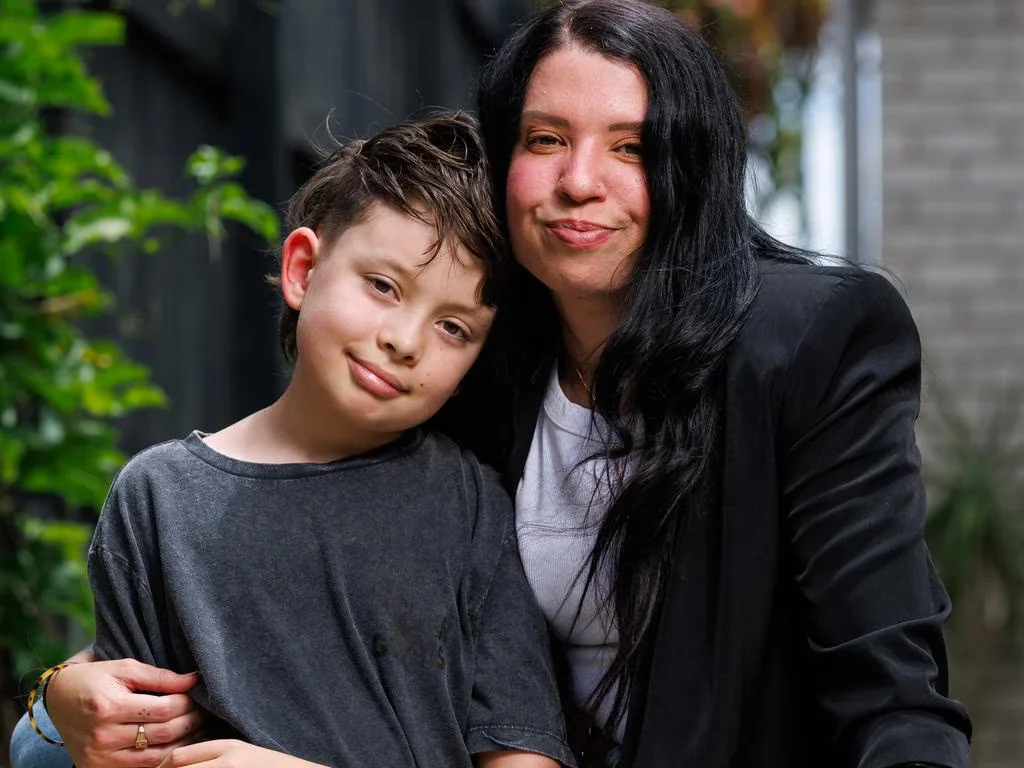
The impact on Cleo herself was equally profound. As a single mother whose entire daily life had revolved around Arlo’s medical needs, she said the transplant gave her back ordinary motherhood, to Arlo and to his sibling Sunny.
Queensland’s Organ Donation Registration Rate
Arlo’s recovery comes as new national data reveals persistently low organ donation registration rates. The latest Australian Donation and Transplantation Report 2025 shows that just 35 per cent of eligible Australians over the age of 16 are registered as organ and tissue donors, down from 36 per cent the previous year. More than 2,000 Australians are currently on transplant waitlists, and roughly one person a week dies waiting.
Queensland sits at 30 per cent of its eligible population registered, the fourth lowest rate in the country. Only the Northern Territory at 15 per cent, Victoria at 23 per cent and the ACT at 27 per cent rank lower. South Australia, by contrast, has 74 per cent of its eligible population registered, more than double the national rate.


The difference comes down to a single policy decision. South Australia retains a mechanism allowing residents to register as organ donors directly through their driver’s licence application or renewal, a tick-the-box step that takes seconds. Queensland, along with most other states, moved away from this mechanism after authorities established the national register in 2002. The ACT and Northern Territory never had the scheme.
The Case for Reinstating Licence-Based Registration
DonateLife chief executive Lucinda Barry said the research was clear that driver’s licence registration would increase registration rates, which in turn would lift consent rates in hospitals. She said DonateLife had set a target of 50 per cent of the eligible population registered nationally, which modelling showed would result in 200 more lifesaving transplants each year. Barry emphasised that prompts redirecting people to a separate link during the licensing process had not produced the results states were hoping for. A direct connection between the licensing system and the Australian Organ Donor Register was what the evidence supported.
Transplant Australia chief executive Chris Thomas described the decision to remove licence-based registration as the worst health policy failure of the 21st century, arguing that the driver’s licence moment represented a unique and now-lost opportunity to engage people at the point of one of their first major life decisions.
Barry also noted that around 90 per cent of those registered under the age of 25 in South Australia had done so through the driver’s licence process, underlining how critical that channel is for reaching younger Australians.
Eight in ten families of registered donors consent to donation in hospital when the moment arrives, Barry said, because they already know what their loved one wanted.
How to Register
Queenslanders can register as organ and tissue donors at donatelife.gov.au. Registration takes a few minutes and covers all organs and tissues, or allows individuals to specify preferences. Families who discuss their donation wishes with loved ones make the decision easier for everyone involved if that moment ever comes.
Published 2-March-2026.
CLICK ANY LOGO TO SEE PUBLICATION