
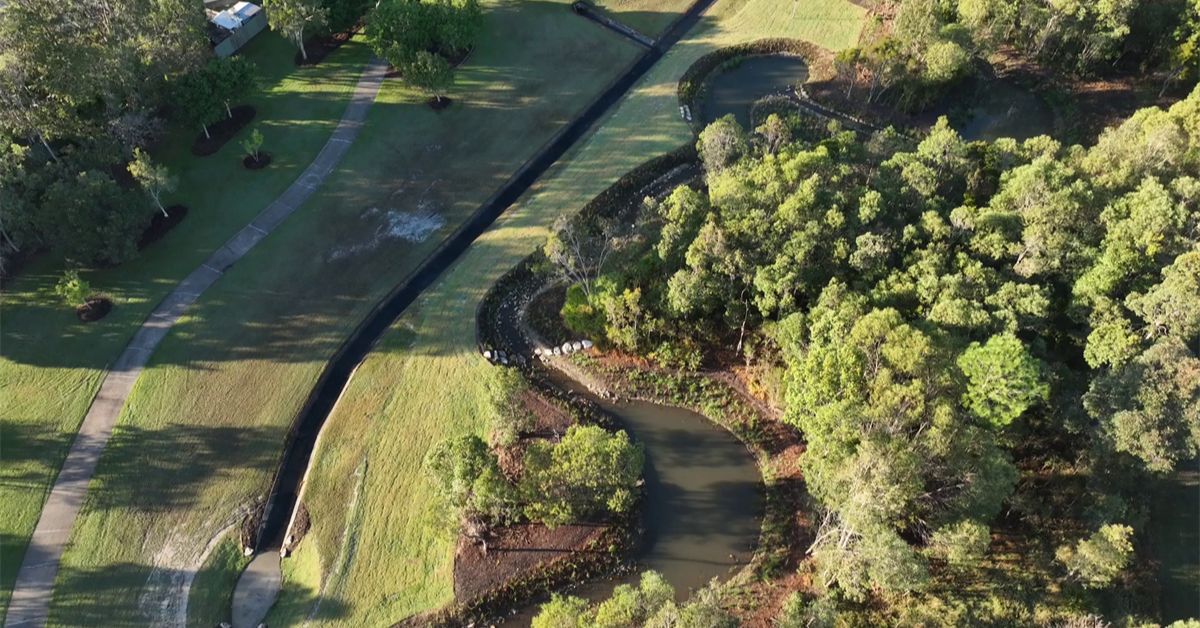
Ninety constructed wetlands spread across the City of Moreton Bay are filtering thousands of tonnes of pollutants from urban stormwater each year before it reaches the region’s waterways, and two of those projects have now won state-level engineering awards for their approach.
The network of strategically positioned ponds, sediment basins, vegetated drains and native plantings treats runoff from urban streets and suburbs before it flows downstream into creeks and eventually into Moreton Bay. The pollutants being captured include sediment, nitrogen, phosphorus and other contaminants typical of stormwater from residential and commercial areas.


The region sits in the upper catchments of waterways that ultimately feed into the bay, meaning what happens to stormwater here has a measurable downstream effect.
Two projects that raised the bar
At the 2025 Stormwater Queensland Awards for Excellence, two Moreton Bay constructed wetland projects took home top honours in their respective categories.


The Crendon Street Park Naturalised Channel project picked up a top award. The project converted a concrete drain into a naturalised constructed waterway, with a rocky and vegetated low-flow channel surrounded by a broader vegetated floodplain. The result is a channel that treats stormwater while creating habitat and green space within a park setting.
The Beech Drive Park Wetland project also secured an award for its performance. Works at the Beech Drive site targeted water quality improvements for the catchment, specifically aimed at preventing sediment from reaching Moreton Bay.
Both projects reflect a broader shift in how urban stormwater is managed, moving away from hard grey infrastructure toward nature-based systems that treat water while also creating habitat, reducing flooding risk and improving the look and feel of public green spaces.
How constructed wetlands work
A constructed wetland is not a natural feature. It is an engineered system designed to mimic the pollutant-filtering function of natural wetlands, using sequences of ponds, sediment basins and densely planted vegetated zones to slow, settle and biologically treat stormwater as it moves through the system.



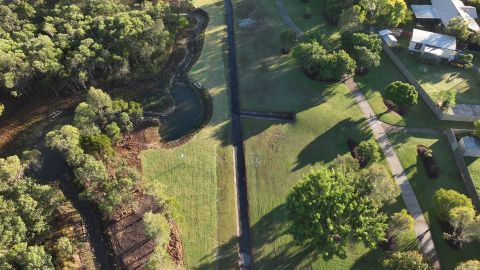
As water enters the first pond, heavy particles and sediment drop out. The water then moves slowly through vegetated zones where native aquatic plants and microbial activity in the root zone break down nutrients including nitrogen and phosphorus. By the time the water exits the system, the pollutant load has been substantially reduced before it reaches any natural waterway.
The thousands of native plants in these systems do more than treat water. They provide habitat corridors for birds, insects and small animals, reduce urban heat, and improve the amenity of the parks and reserves in which the wetlands are built.
Moreton Bay and what it’s worth protecting
Moreton Bay is a Ramsar-listed wetland of international significance, home to more than 700 species of marine life, internationally significant migratory shorebird populations, dugongs, dolphins and sea turtles. It supports both commercial and recreational fisheries and draws tourists and residents to the peninsula coastline year-round.
Urban stormwater is one of the most persistent sources of pollution entering the bay. Nutrients from household gardens, sediment from construction sites and fine particles from roads and paved surfaces all travel through stormwater drains and into creeks, which carry them to the bay.
Constructed wetlands intercept that flow at the catchment level, removing pollutants at scale before the water leaves the urban area.
For more information on Moreton Bay’s waterway programs, click here.
Published 8-June-2026
Featured Image Credit: City of Moreton Bay
CLICK ANY LOGO TO SEE PUBLICATION