
For communities around Caboolture and southern Bribie Island, a proposed Bribie Island flight path change could alter where Brisbane Airport arrivals travel across northern Moreton Bay.
The proposal forms part of Package 3 of the Noise Action Plan for Brisbane, which examined options to reduce the frequency and concentration of aircraft movements over Greater Brisbane communities.


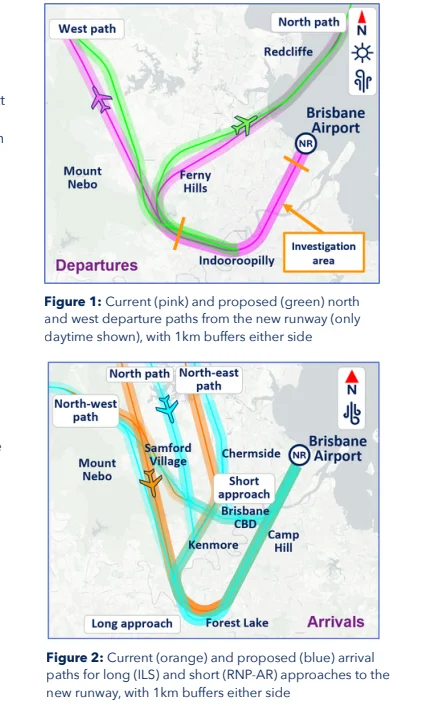
Maps comparing the current and proposed northern arrival routes place Caboolture within the wider flight path area, alongside Elimbah, Donnybrook, Woorim and Redcliffe. No separate estimate has been published for the number of Caboolture residents who may be affected by the change.
Southern Bribie Island has a more specific connection to the plan. One of the progressed Package 3 actions is intended to move over-water arrivals away from the southern end of the island, where aircraft have travelled at lower altitudes on their approach to Brisbane Airport.


Bribie Island Flight Path Awaits Assessment
The proposed northern routes would shift arrivals further north over water before aircraft line up with the northern end of Brisbane Airport’s new runway.
Airservices Australia estimates the revised paths would reduce the number of people overflown from the north and west over water by about 59,000. However, the design would also place about 6,000 additional people beneath the final turn over land because the approach connection must be extended to comply with aviation requirements.
The Bribie Island flight path change has not begun operating. It remains subject to a Civil Aviation Safety Authority Airspace Change Proposal and cannot be introduced until that assessment is completed.
This differs from changes to arrivals over land at the southern end of Brisbane Airport’s runways, which commenced on 9 July 2026. Those routes did not require further design review or additional approval.



Different Approaches For Non-Jet Aircraft
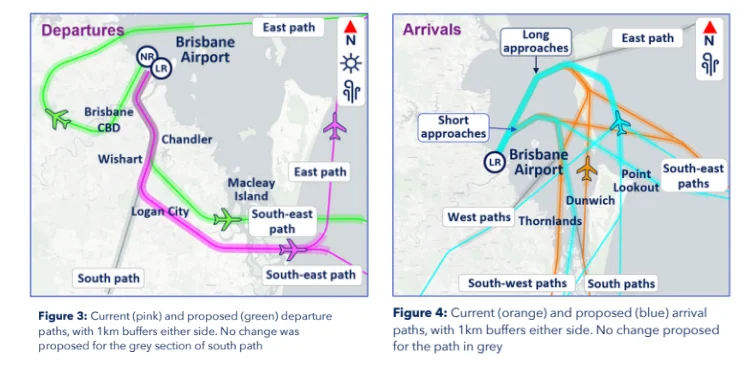
Package 3 also progressed short-approach connections for non-jet aircraft using the northern runway end.
These connections would allow non-jet arrivals to be divided between long and short approaches over water. Aircraft using a shorter approach would turn and align with the runway closer to the airport, providing another route for distributing flights.
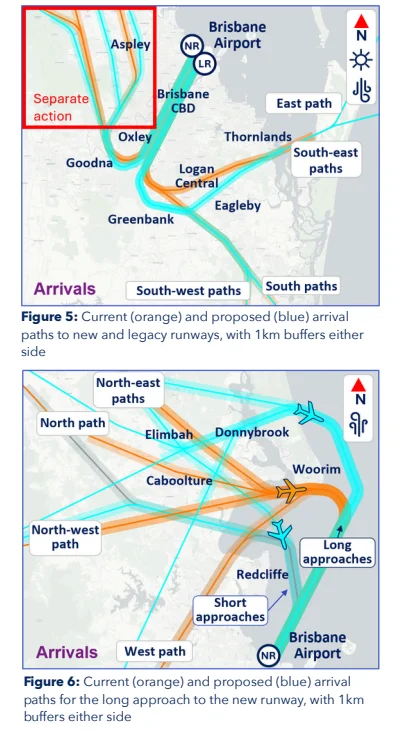
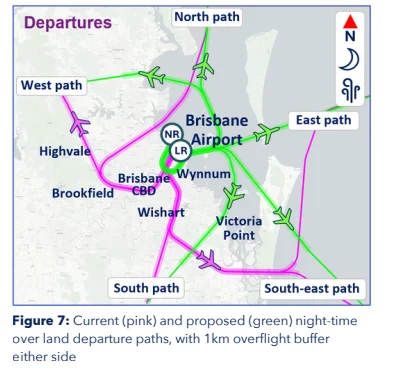
The change is also intended to reduce the impact of visual arrivals over Redcliffe. A separate proposed adjustment to non-jet departures was not progressed because it was not expected to produce a meaningful noise difference and could restrict jet departures using the same runway.
Wider Changes Remain Contested
Across the wider package, Airservices Australia estimates almost 140,000 fewer residents would be directly overflown through northern and southern arrival changes and an adjustment to south-east departures.
The Brisbane Flight Path Community Alliance disputes that figure. The group argues it is based on estimated populations within modelled flight path corridors rather than measured aircraft noise, flight frequency, night-time disturbance or cumulative exposure.
It has also criticised the absence of a curfew, flight cap, guaranteed over-water operations and enforceable noise limits from Package 3.
The changes are also designed to support Independent Parallel Runway Operations, allowing aircraft to land on both Brisbane Airport runways at the same time during busy daytime periods. Regular use of that system is not expected until mid-to-late 2027.
Feedback on the Package 3 reports remains open until 23 August 2026.
Published 15-July-2026
CLICK ANY LOGO TO SEE PUBLICATION