




Photo credit: Facebook/Jarrod Bleijie MP
Bribie Island has taken a major step toward safeguarding its northern tip, with the completion of the first stage of an emergency project after just 47 days of around the clock work. This key phase saw the closure of the breach known as “Alfred,” which opened earlier in the year and raised serious concerns about the island’s resilience going into the storm season.
Read: The $20m Question: Can Human Engineering Save Bribie Island from the Sea?


The $20 million, four-part plan was launched by Queensland in response to two significant breaches at Bribie’s northern end. Together, these openings have posed risks to the island’s structure and affected navigation through the Pumicestone Passage.
The most recent breach, formed during large swells associated with ex‑Tropical Cyclone Alfred, had been widening and edging toward the earlier 2022 breakthrough, referred to in reports as “Bribie Bar.”


To close Alfred, dredging contractors and heavy machinery were deployed continuously, with bulldozers pushing in sand under cover of darkness to reconnect the island’s dune system. The final load was placed during a late night push, officially sealing the gap that emerged earlier this year.
That breakthrough had previously forced the Caloundra Coast Guard to relocate its base to Pelican Waters, after shifting channels made their former access point too dangerous. The loss of reliable access, along with the changing sandbanks, had disrupted boat traffic and local rescue operations.
While Alfred is now closed, the broader project continues. Stage two will focus on a nearby “wash-over” zone roughly 200 metres to the south, where seawater still flows at high tide. Without intervention, that area is seen by engineers as a vulnerable point that could open into a new full breach.
Work on stage two is expected to take around two weeks, after which crews will move north to reinforce the area around Bribie Bar. The third stage involves widening that stretch of land and increasing its elevation. Official plans call for a dune width of roughly 80–90 metres and a height about 3.5 metres above existing levels.


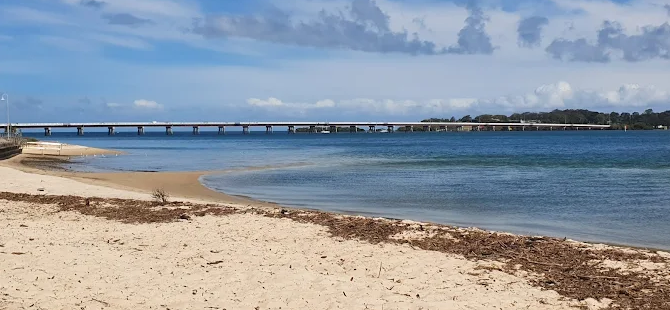
A second dredge is set to arrive in the coming weeks to support this phase, allowing the project to accelerate. The final stage will focus on restoring marine access. Authorities intend to dredge a channel about two metres deep toward Bulcock Beach to re-establish safe passage through the Pumicestone Passage.
The works are scheduled to conclude by April 2026, according to the Coordinator-General’s project timeline. Beyond stabilising the shoreline, the works also aim to improve local water quality and enhance navigational safety. These aims are central to the state government’s emergency-works plan.
This restoration is rooted in broader community concern. A recent review into Bribie Island’s erosion drew more than 1,200 public submissions. The emergency work is informed by that feedback and independent expert advice, with the goal of restoring the island’s resilience while protecting Golden Beach and Pumicestone Passage.
Read: Bribie Island Secures Multi-Million Dollar Boost in State Budget
As residents and marine users watch the operations, the closure of Alfred is being hailed as a milestone. For many, it signals not just a temporary fix, but a commitment to rebuilding Bribie Island’s natural barrier and making it strong enough to withstand future storms.
Published 24-November-2025
CLICK ANY LOGO TO SEE PUBLICATION