

Photo credit: Facebook/Biosecurity Queensland
Boaties launching from Bribie Island and across Moreton Bay are being met with stark biosecurity warnings this summer as authorities ramp up efforts to contain an invasive oyster species that first appeared in local canal systems 18 months ago.
Read: Kangaroo Rescued from Bribie Island Canal After Seven-Hour Ordeal


Large billboards have been erected at boat ramps and marinas throughout the region, urging vessel owners to clean their boats, trailers and fishing gear to prevent the spread of the Suminoe oyster during the peak summer boating season.

The signage campaign comes as a marine biosecurity alert remains active for waters where the pest has already been detected, including Bribie Island’s canal network, Boggy Creek near Pinkenba, and Kedron Brook in Brisbane.


While no confirmed sightings have been reported in the bay’s southern reaches, biosecurity officials are particularly concerned that increased vessel movements over the summer holidays could carry the species into new locations around Redland and other previously unaffected areas.
Legal Obligations for Boaties
Under the Queensland Biosecurity Act 2014, waterway users face legal obligations to prevent the oyster’s spread. The Suminoe oyster is classified as a biosecurity matter, placing a legal duty on boaties to take reasonable and practical steps to stop its movement between waterways.
The signage rollout is designed to reinforce legal compliance at a time when boat ramps, marinas and anchorages across Moreton Bay are experiencing their busiest period of the year.
Boat hulls, anchors, ropes, fishing equipment and trailers have been identified as the most likely pathways for the oyster to spread, particularly when vessels move between different locations without thorough cleaning between trips.


What is the Suminoe Oyster?
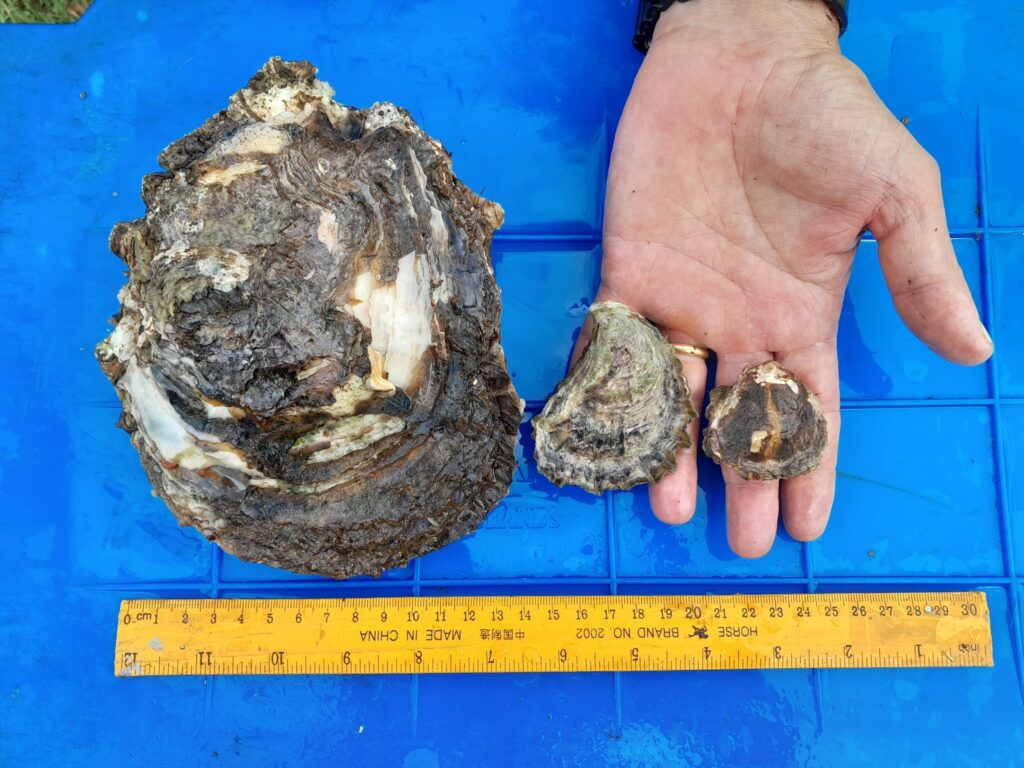
The Suminoe oyster, scientifically known as Magallana ariakensis and also called the Chinese river oyster, is a large invasive oyster that can grow up to 240mm in length. The species may be difficult to distinguish from native oysters until it reaches maturity.
First detected in Australian waters in June 2023 in the Bribie Island canal system, the oyster has since been confirmed in several waterways including the Brisbane River, Kedron Brook and Boggy Creek. The discoveries prompted a coordinated response from state and federal biosecurity authorities.
The species is illegal to take, consume or use as bait in Queensland. Biosecurity officials warn the oyster can accumulate heavy metals and other pollutants as it filters water, particularly in urban waterways.
Biosecurity Queensland has determined the oyster cannot be eradicated from affected areas and is instead pursuing a containment and monitoring strategy that relies heavily on boatie cooperation and compliance with biosecurity protocols.
Federal Support and Research
The federal government is supporting Queensland’s response through the Department of Agriculture, Fisheries and Forestry, which oversees the National Introduced Marine Pest Information System. CSIRO is conducting genetic sequencing of the Suminoe oyster through the National Biodiversity DNA Library, work designed to improve detection capabilities using environmental DNA surveillance methods.
National guidance on managing invasive marine bivalves has been published by the department in conjunction with the Marine Pest Sectoral Committee. The Consultative Committee on Introduced Marine Pest Emergencies has provided technical advice to Queensland authorities throughout the response.
Federal officials acknowledge that while Queensland has not reported any observed commercial impacts to date, marine pests can have wide-ranging consequences for Australia’s unique marine ecosystems, the blue economy including aquaculture and fisheries, and social amenities.
The department has emphasised that although the full impacts of the Suminoe oyster are not well understood, further spread should be minimised to mitigate potential environmental, economic and social consequences.
Read: Bribie Island Erosion Project Moves Forward with Key Milestone Achieved
What Boaties Should Do
Anyone who spots a suspected Suminoe oyster should report it to Biosecurity Queensland. The agency is asking all waterway users to thoroughly clean boats, trailers and equipment between trips, particularly when moving between different waterways.
With summer in full swing and boat ramps across the region experiencing peak activity, the containment strategy relies on the local boating community taking biosecurity precautions.
Published 14-January-2026
CLICK ANY LOGO TO SEE PUBLICATION