



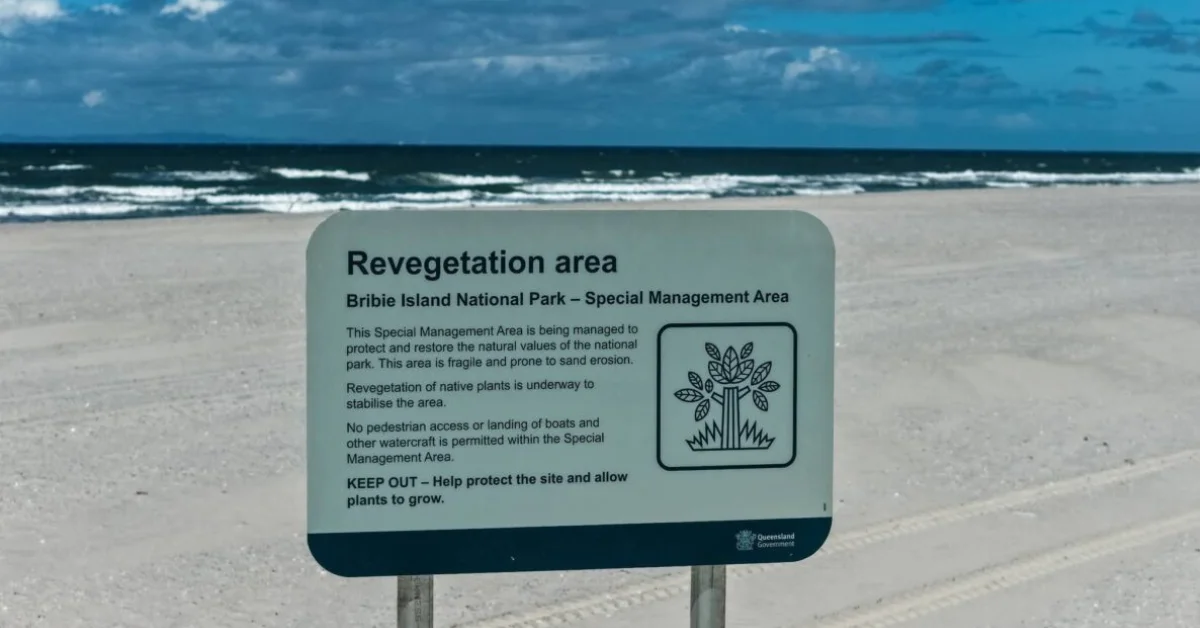
Crews have begun planting hundreds of native tube stock plants across the newly formed beach area at Bribie Island’s breakthrough site, marking the latest stage in an ongoing coastal restoration effort at one of Queensland’s most popular island destinations.
Read: Bribie Island Dredging Works Done, Coast Guard Returns Home
One plant at a time, restoration crews are pressing native species into the sand along the new beach area that formed following Bribie Island’s breakthrough, giving the landscape its best shot at long-term recovery.


The planting effort, which got underway recently, is part of a broader coastal restoration push that has been building since the Queensland Government announced a $20 million emergency coastal fortification program. That funding was triggered by cyclone-driven breakthroughs in 2022 and 2025, which exposed the island’s fragile dune systems to ongoing erosion, placing pressure on critical natural buffers that protect inland environments, infrastructure and recreational areas.
Environmental consultancy Ecosure, which has been on the ground at Bribie Island leading much of the restoration work, described the native planting as another step towards securing the future of the coastline. The species going in are selected specifically for their ability to stabilise sand, reduce erosion, and encourage the natural regeneration of the coastal ecosystem. The plants are young and fragile right now, and the coming months and years will be telling, but every one in the ground counts.


The planting follows months of significant engineering work on the island, including the installation of twin 1.35-kilometre sand fences hand-crafted by Ecosure’s field team using natural materials. Those fences are designed to work with coastal processes rather than against them, slowing wind speeds and trapping moving sand to encourage gradual dune rebuilding over time.
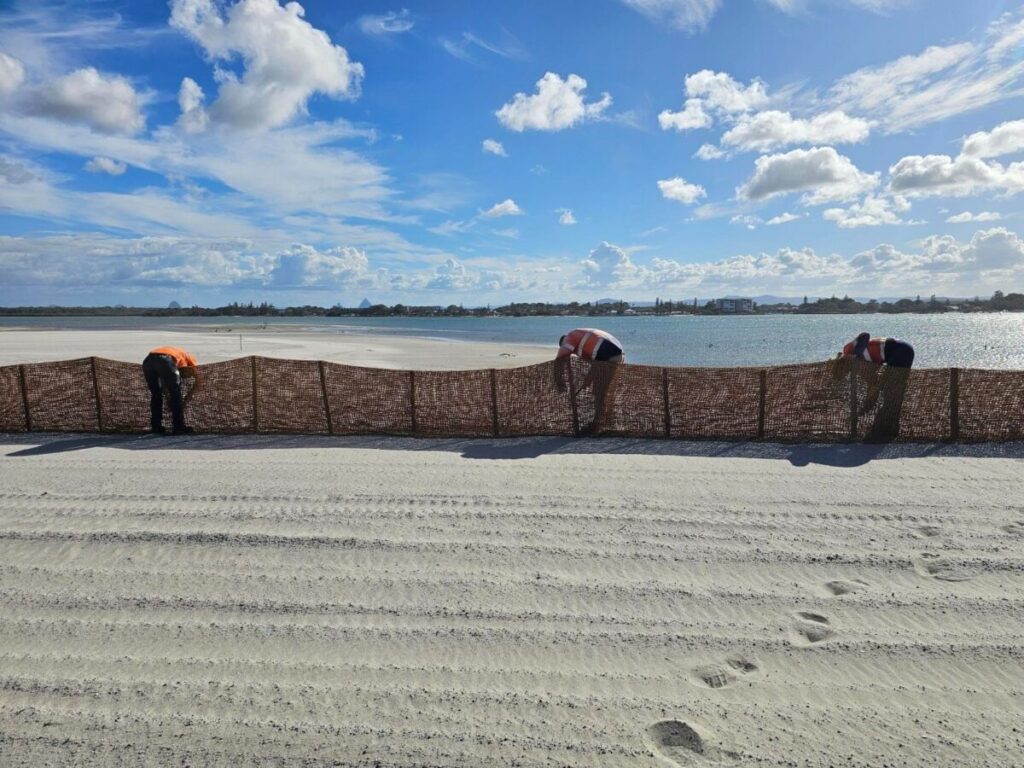
It is a low-impact approach that has been carefully thought through. Rather than heavy machinery or hard engineering, the method relies on skilled hands, on-ground expertise, and materials that blend into the landscape. For a site as sensitive as this one, that kind of restraint is not just practical, it is necessary.
With the fences now in place, planting represents the next phase of the restoration effort. The native tube stock going into the ground will help anchor what the fences have started, giving the recovering dune system a biological foundation to grow from.
Read: World Turtle Day Shines Spotlight on Bribie Island Conservation Efforts


The public has been asked to stay off the area while the plants establish themselves. These are early days, and the site needs space and time for the young plants to take hold. Those following the project closely have indicated they will continue sharing updates as the restoration unfolds.
For the Bribie Island community, it is a moment worth pausing on. After a rough few years of storm damage and emergency works, there is something quietly hopeful about seeing plants go in the ground. The work is far from done, and nature will ultimately have the final say, but the people putting in the hours out there are giving this stretch of coastline a genuine fighting chance.
Featured image credit: Laura Lapham, Alina Crosbie & Duncan Smith/Ecosure
Published 8-June-2026
CLICK ANY LOGO TO SEE PUBLICATION